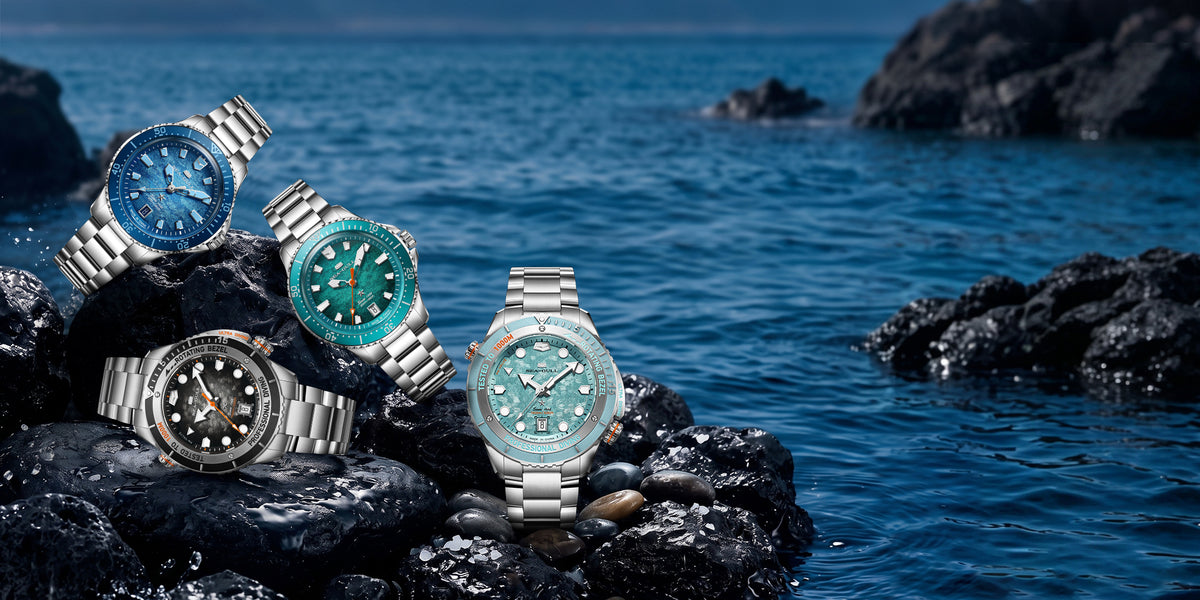






















A tribute to every soul who dares to embrace the unknown.

The Chinese Navy's Anchor in Antarctica
Part 1. Breaking the Ice of an Era: The Antarctic Expedition
Antarctica, a continent shrouded in mystery, has long captivated explorers from various countries, urging them to uncover its secrets. By the 1980s, 16 countries had established nearly 40 year-round research stations and over 100 seasonal stations in the region. Yet, China had no presence on the continent at that time. As a founding member of the United Nations, China could only observe at the negotiation tables for Antarctic governance, without the right to vote. Without research stations, there was no data; without data, there was no voice. This was not a grievance of any particular country but a reflection of a major nation failing to fulfill its scientific responsibility to humanity.
In February 1984, following the "Zhu Kezhen Field Science Work Award" conference held by the Chinese Academy of Sciences, 32 scientists, including Wang Fubao and Sun Honglie, sent a joint letter to the Central Committee and the State Council with the title "Marching Towards Antarctica." In it, they proposed that China establish a research station in Antarctica for scientific exploration. That same year, the Chinese government approved the project and began assembling the first Antarctic expedition team, with the sole objective of establishing a research station in Antarctica. It was not for vanity or to compete, but to fill the rightful position of a major nation, contributing the scientific strength of a quarter of the world's population to the Earth’s last pristine frontier. A journey spanning tens of thousands of miles marked the beginning of China's polar endeavors, and a long-overdue, yet essential, response from a great power.
In 1984, China, with 22% of the world’s population, set out to build its first Antarctic research station. However, the budget allocated for the mission was only 20 million RMB. At that time, the cost of a regular icebreaker was six to ten times that amount. Without an icebreaker, without a specialized polar research vessel, and even without a reliable map of Antarctica, the first Chinese Antarctic expedition team faced an incredibly long and perilous journey.

Map of Antarctic Research Routes
The expedition team was to traverse the vast Pacific Ocean in just one month, crossing 93 latitudes and 180 longitudes, with no stops at any ports along the way. Their route led them directly to Ushuaia, the southernmost port of South America in Argentina, covering a round-trip distance of over 23,000 nautical miles, which is more than one full circumnavigation of the Earth. Along the way, the fleet would pass through two typhoon-prone zones, several island reefs, and narrow straits. They would also sail through the "Roaring Forties," navigate the Drake Passage, often referred to as the "sailor's graveyard," and contend with the unpredictable winds, sudden ice floes, and massive icebergs that could severely jeopardize the safety of the vessels.
With no prior experience, no established precedents, and no comprehensive support system, this was an expedition where courage filled the gaps left by inexperience. In addition to the "Xiangyanghong 10" scientific research vessel, they also needed a reliable ocean-going supply ship to ensure the success of their mission.

The J121 and Xiangyanghong 10 (向阳红10) are docked at the port
Part 2:Navigating the Waves, Life and Death in a Single Moment
Faced with the perilous journey to Antarctica, the Chinese Navy's J121 vessel was chosen for the mission. This 925-class ocean salvage and rescue ship, independently designed and built by China, was launched in August 1979 and officially entered service in May 1982. At the time, it was the largest, longest-range, and most advanced vessel in the Chinese Navy, equipped with comprehensive rescue gear and capable of carrying helicopters. With its outstanding capabilities in long-distance navigation and rescue operations, the J121 was selected, alongside the "Xiangyanghong 10" (向日红10) scientific research vessel, to form the core of the mission’s maritime force.


The J121 Antarctic Voyage
The naval team, primarily composed of the J121 vessel, was supplemented by the 179th helicopter squadron, totaling 308 officers and sailors. These personnel were carefully selected from the Chinese Navy’s elite ranks, with expertise spanning navigation, mechanical engineering, aviation, and rescue operations. Together, they formed a comprehensive support force, leveraging the coordination between the vessel and helicopter to ensure the success of the expedition.

Group Photo Before Departure for the Antarctic Expedition, Qingdao, December 1984

J121 Vessel Equipped with Helicopter

Departure Ceremony for the First Antarctic Voyage
On November 20, 1984, the J121 salvage and rescue ship set sail from Wusong Port in Shanghai, tasked with a range of critical missions including transport of supplies, personnel escort, and sea zone exploration. The fleet crossed the equator and navigated through the Roaring Forties and the notoriously dangerous Drake Passage, covering nearly 20,000 miles in total. The crew faced the extreme environmental shift from the hot and humid conditions near the equator to the frigid and stormy weather of Antarctica.

J121 During the Antarctic Voyage

J121 Battling Heavy Waves at Sea

Expedition Fleet Crossing the Pacific Ocean (I)

Expedition Fleet Crossing the Pacific Ocean (I)

Expedition Fleet Securing Supplies During Pacific Crossing (III)
During the voyage, the J121’s main engine suffered a severe malfunction, with the cooling pipe bracket of the first cylinder breaking down. Inside the engine room, at a sweltering 60°C, the crew worked tirelessly for five hours to repair the damage, but to no avail. Time was critical, as the window to establish the research station in Antarctica was rapidly closing. The crew made a bold decision to seal off the damaged first cylinder and continue using the remaining eight cylinders. This solution was not in any textbook.
It was the Chinese Navy's first voyage of this kind, defying all odds to sail into the heart of Antarctica.
Part 3. The Nation’s Timekeeper: Witnessing the Antarctic Speed of China’s Brave

J121 Arriving in Antarctica
On December 27, 1984, the expedition team arrived on the Antarctic continent. The winds howled across the ice fields, with temperatures plummeting to minus 30°C. The Great Wall Station had to break ground on the desolate, permanently frozen soil, and there were less than three months left in the Antarctic summer window. After mid-March, the sea would freeze over, and construction would be forced to halt.

Groundbreaking Ceremony of Great Wall Station
Time became the critical factor in the success or failure of the station’s construction. The command group of the Chinese Navy’s J121 vessel organized 308 officers and sailors into four assault teams, taking turns to work around the clock. They plunged into the icy sea, hammering piles in water that was deep enough to submerge them past their waists, constructing a 29-meter temporary dock in just eight hours. On the rocky shoreline, they used shovels, picks, and hammers to break through the hard, frozen ground, with each strike leaving only deep, fist-sized impressions. During the night, the soldiers would rise at 5 a.m. to head to the island. On good weather days, they often worked nonstop, with their hands covered in blisters. During meal times, their hands would shake so much that chopsticks would fall to the ground, and exhaustion set in to the point that they could sleep standing up for a few minutes.

Small Boat Transport Operations

J121 Lifting and Transferring Supplies

Material Transfer at Temporary Pier

Earthworks Construction at Great Wall Station

Construction Work in Snowstorm Conditions (I)

Construction Work in Snowstorm Conditions (II)

Main Structure Construction of Great Wall Station (I)

Main Structure Construction of Great Wall Station (II)

Main Structure Construction of Great Wall Station (III)

Main Structure Construction of Great Wall Station (IIII)

Main Structure Construction of Great Wall Station (V)

Main Structure Construction of Great Wall Station (VI)

Main Structure Construction of Great Wall Station (VII)

Main Structure Construction of Great Wall Station (VIII)

Main Structure Construction of Great Wall Station (IX)
In just 26 days, two research buildings were completed. The meteorological observation station, communication station, oil storage tanks, and four auxiliary buildings followed soon after. On February 21, 1985, the Great Wall Station was officially completed, taking just under two months from start to finish. The Chinese soldiers set a world record for the fastest construction of a polar station, demonstrating the extraordinary speed of Chinese military personnel in the harshest of environments.

Completion Ceremony of Great Wall Station

Completion Ceremony of Great Wall Station
J121 Awarded First-Class Merit Citation
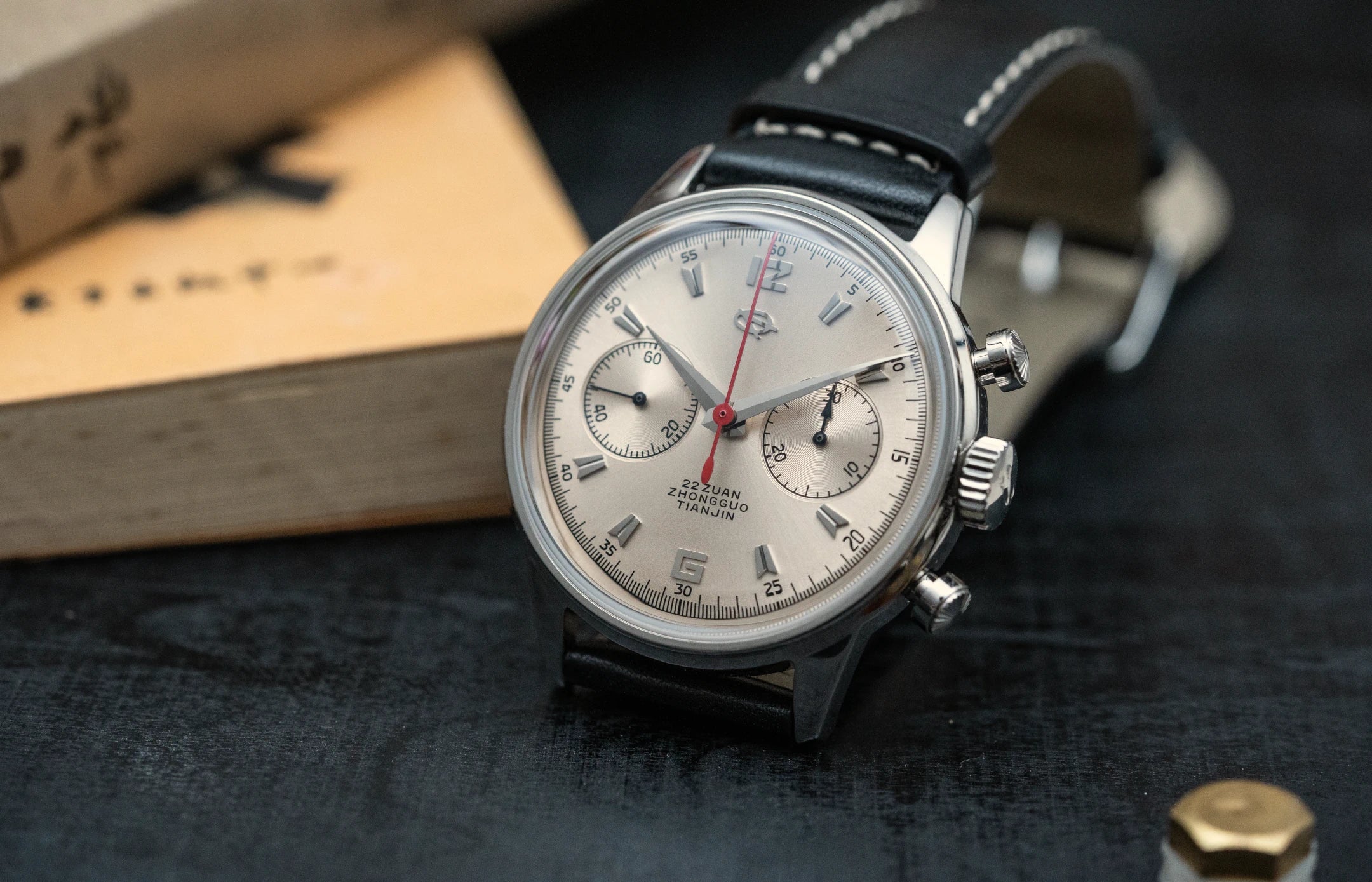
For 45 days, the Seagull ST5B rested on the wrist of every officer and sailor aboard the J121.

ST5B
In 1984, Seagull Watch was selected as the official timekeeping equipment for the Antarctic expedition team. This was no coincidence. It was a testament to the nation’s trust in the reliability of the watch. In Antarctica, time is more than just a number. It represents the timing of the tides, the timing for roll call, and the time left before returning home. A malfunctioning watch could delay the entire mission. And so, Seagull was entrusted with the mission.

The ST5B was not part of Seagull's regular product line. It was specifically customized for this mission. It was designed to withstand extreme conditions with the following features:
Magnetic Resistance: The J121 vessel had numerous electronic devices, creating a magnetic field much stronger than everyday environments. The ST5B’s anti-magnetic design ensured that the movement remained unaffected by these fields, maintaining precise timekeeping.
Cold Resistance: At temperatures as low as -50°C, ordinary watch lubricants would freeze. The ST5B’s movement materials and lubrication scheme were specially adapted to cope with these extreme cold conditions.
Water Resistance: The expedition involved long hours at sea, with supplies being transferred by small boats. The ST5B’s sealed structure ensured it remained waterproof and reliable throughout the operation.
Daily Deviation: One Second
During the Antarctic expedition, a test was conducted with several ST5B watches. A selection of ten watches was randomly chosen: some were buried in the snow, some were buried in the frozen ground, and others were worn by the crew during their daily tasks. The result was remarkable, all of the watches kept running, with not a single one stopping. The daily deviation was within one second. This meant that over the course of the mission, which lasted for several weeks, the total deviation of the watch was no more than one minute. In 1984, this level of accuracy was top-tier for mechanical watches; even today, it remains an excellent standard.

Antarctic Diving Experiment (I)

Antarctic Diving Experiment (II)
Time is the fairest of judges. Forty years ago, it did not fail those who trusted it.
From the first steps taken on Antarctica in 1984, to its classic rebirth in 2026; from safeguarding the nation’s expedition, to becoming a symbol of honor on the wrist, the Seagull 1984 Antarctic Expedition Series stands as a tribute to the spirit of deep-blue exploration, and a reminder of a nation's mission through its precise timekeeping.
This watch was born in 1984. It was not created to be stored away as a mere collector's item; it was made to be worn, to be lived in.
It was tested in glaciers, frozen in the harshest cold, battered by towering waves. It was carried by a group of young men, barely in their twenties, as they embarked on a journey where survival itself was uncertain.
It did not disappoint a single soul.
Sea-Gull 1984 Series
 |
 |
SEA-GULL 1984 Antarctic Expedition Dive Watch Special Edition
(ref. 816.17.1064A/816.37.1064A)
——
Seagull Ocean Series 1984 Antarctic Expedition 200m Retro Dive Watch 40mm
 |
 |

(ref. 816.37.1064/816.27.1064/216.77.1064)
——
1984 Antarctic Expedition 150m Water Resistance Vintage Chronograph 40mm
 |
 |
(ref. 816.37.1068)