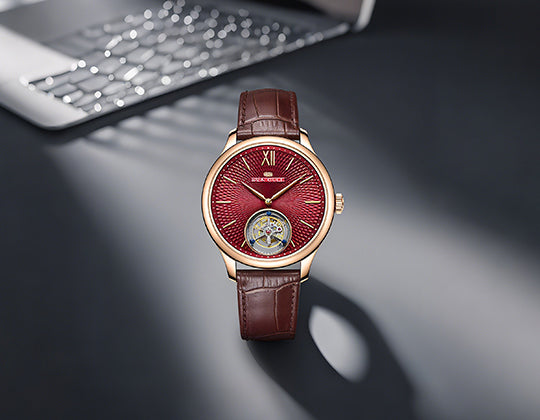
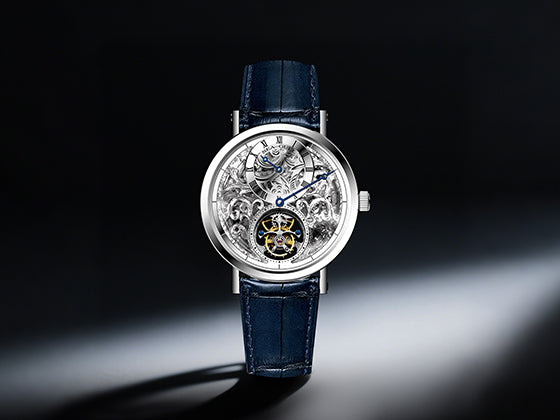
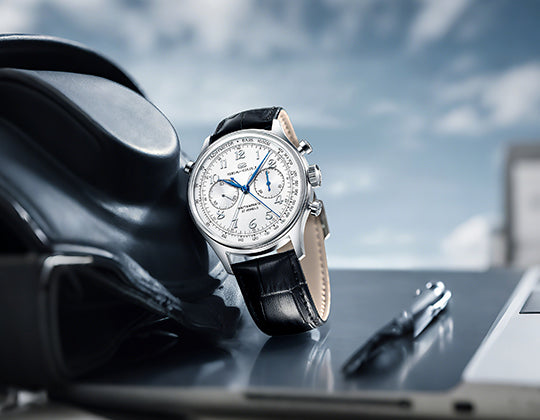
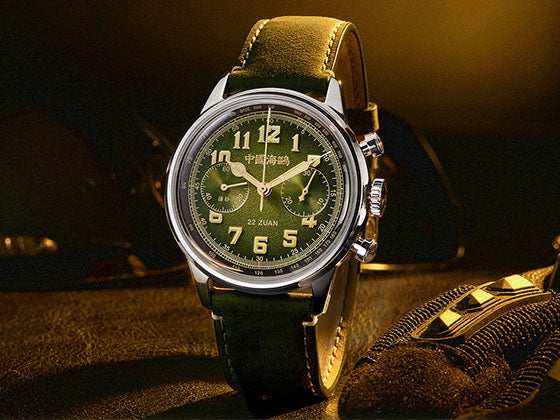

For anyone beginning their journey into mechanical watches, one of the first questions that arises is simple: What is the difference between a manual watch and an automatic watch?
Both belong to the same mechanical watch family and share the same fundamental principle — they run without batteries, powered entirely by mechanical energy stored in a spring. Yet the way this energy is generated differs, shaping not only how the watch functions but also how it is experienced by the wearer.
Understanding this distinction is an important step toward appreciating mechanical watchmaking.
The Shared Foundation of Mechanical Watches
Before exploring their differences, it is important to understand what manual and automatic watches have in common.
Both types contain the same core mechanical systems:
- Mainspring – stores energy
- Gear train – transfers power through the movement
- Escapement and balance wheel – regulate time
- Hands and dial – display the time
The key difference lies in how the mainspring is wound.
Manual-Wind Watches: Powered by the Wearer
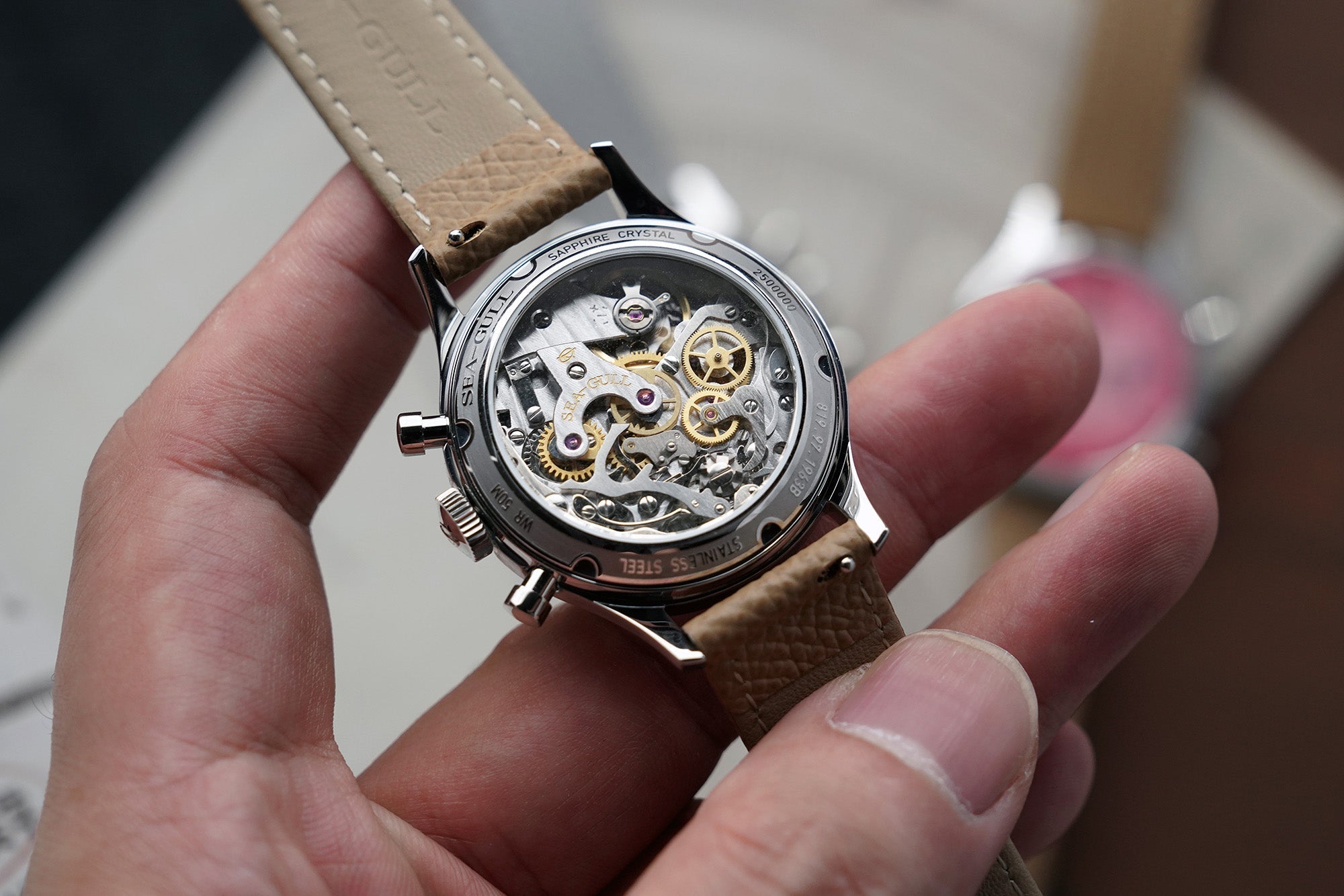
A manual-wind watch requires the wearer to wind the crown periodically in order to tighten the mainspring.
Each turn of the crown stores energy in the spring, which is then gradually released to power the watch movement.
Characteristics of Manual Watches
- The watch must be wound regularly, often once per day.
- The movement structure is usually thinner and simpler.
- Many collectors appreciate the direct interaction with the watch.
For enthusiasts, the ritual of winding a watch can become part of the ownership experience — a daily connection between the wearer and the mechanical machine on the wrist.
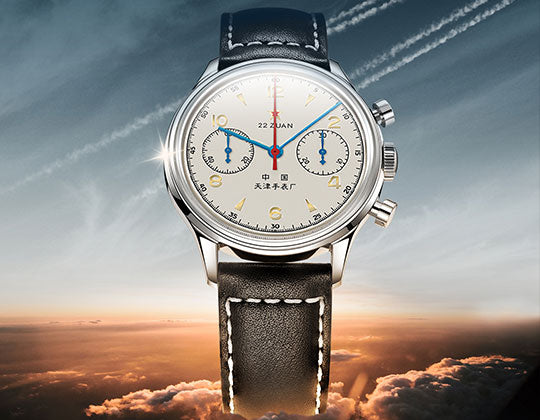
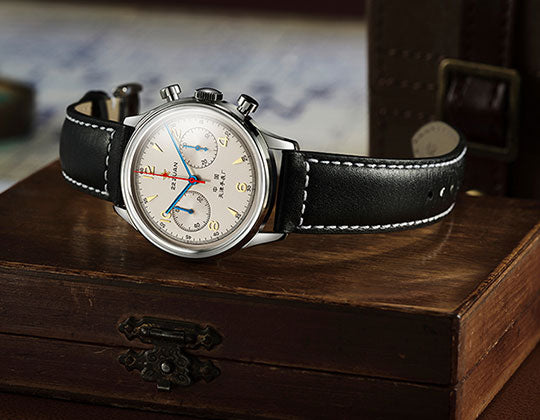
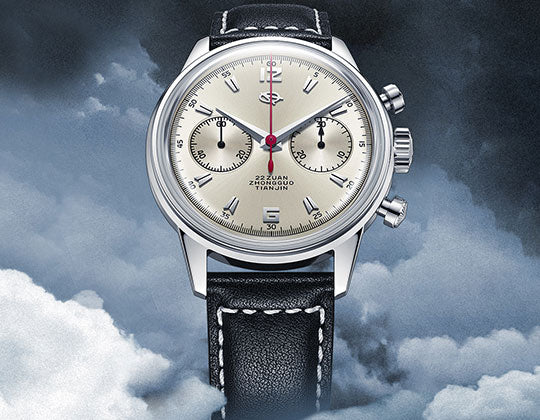
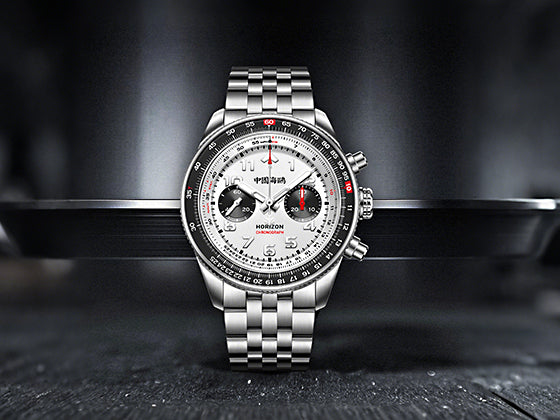
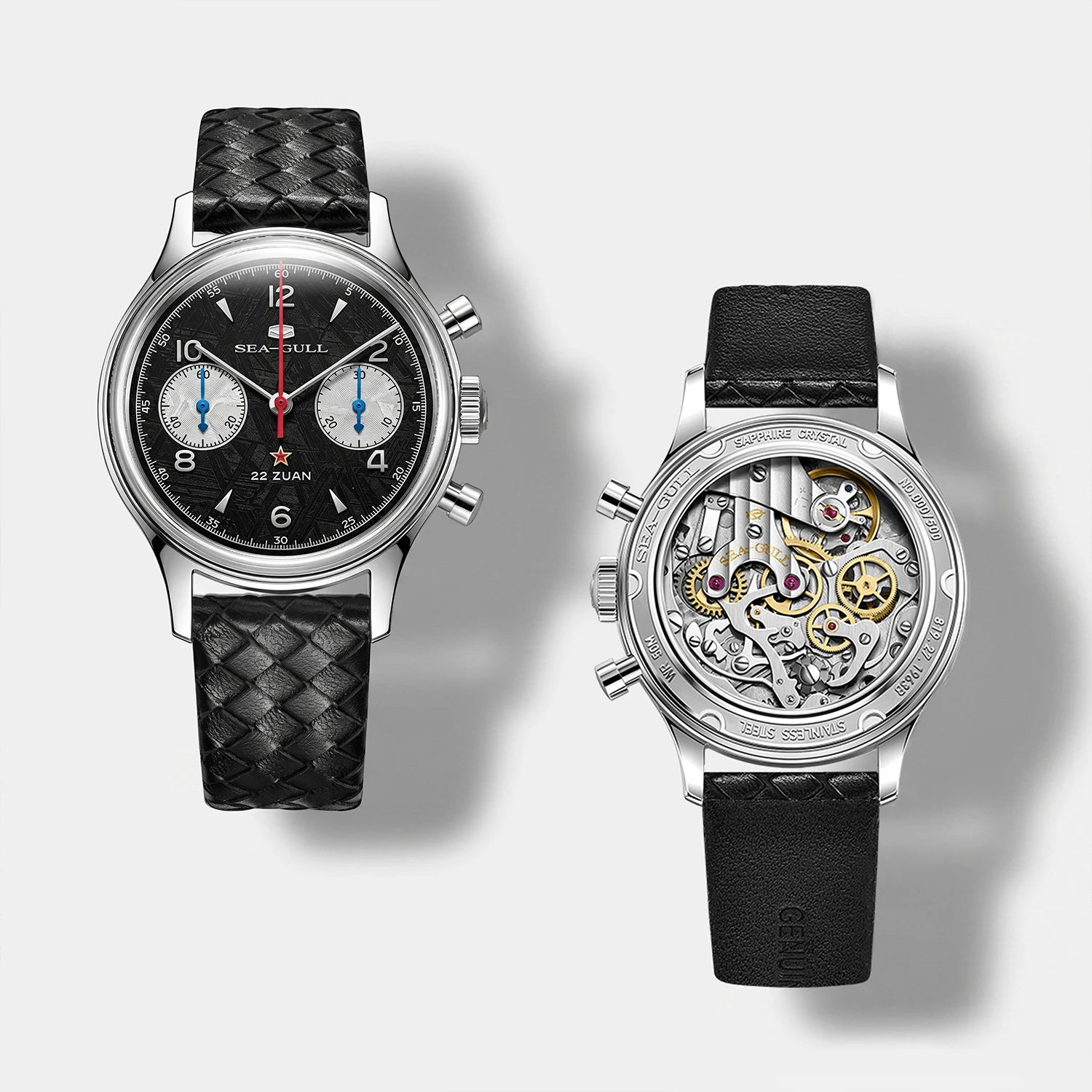
Manual chronographs, in particular, are often favored for their traditional architecture and mechanical purity.
Automatic Watches: Powered by Motion
An automatic watch, also known as a self-winding watch, winds the mainspring automatically through the movement of the wearer’s wrist.
Inside the movement is a semicircular metal weight called a rotor. As the wrist moves throughout the day, the rotor rotates and transfers energy to the mainspring.
Characteristics of Automatic Watches
- The watch winds itself during normal wear.
- It generally requires less frequent manual winding.
- The movement includes additional components such as the rotor and winding system.
For many wearers, automatic watches provide the convenience of mechanical timekeeping without needing daily winding.
Structural Differences Inside the Movement
While both types share the same core architecture, automatic movements contain additional mechanisms.
Manual Movement
- Mainspring barrel
- Gear train
- Escapement
- Balance wheel
Automatic Movement
- All manual components
- Rotor
- Automatic winding gears
- Reversing mechanisms
Because of these extra parts, automatic movements are typically slightly thicker than manual ones.
Which One Is Better?
In practical terms, neither system is inherently superior. Instead, the choice often depends on personal preference and lifestyle.
Manual Watches May Appeal to Those Who:
- Enjoy the traditional ritual of winding
- Appreciate simpler mechanical architecture
- Prefer slimmer watch cases
Automatic Watches May Suit Those Who:
- Wear the watch daily
- Prefer low-maintenance operation
- Appreciate continuous self-winding convenience
Both types represent the same mechanical philosophy — precision engineering powered entirely by physical energy.
A Shared Mechanical Heritage
Whether manual or automatic, mechanical watches reflect centuries of horological innovation. Each movement transforms stored energy into a carefully regulated rhythm of gears and oscillations, allowing time to be measured without electronics or batteries.
Understanding the distinction between manual and automatic watches not only helps collectors choose the right timepiece, but also reveals the elegance of mechanical watchmaking — where even the simplest design decisions shape how a watch interacts with its wearer.